

Too Soon to Soar
Growth is rarely smooth, often messy, and sometimes laugh-out-loud funny

It was late March 2022 when I first spotted the female great horned owl sitting on her nest. Nestled in the crook of a giant maple tree near the Idaho Botanical Gardens, this discovery marked the beginning of my annual pilgrimage to observe this remarkable cycle of life—a tradition sparked years earlier by a fellow nature enthusiast. Over the next month, watching the nesting process would prove to be a fascinating experience.
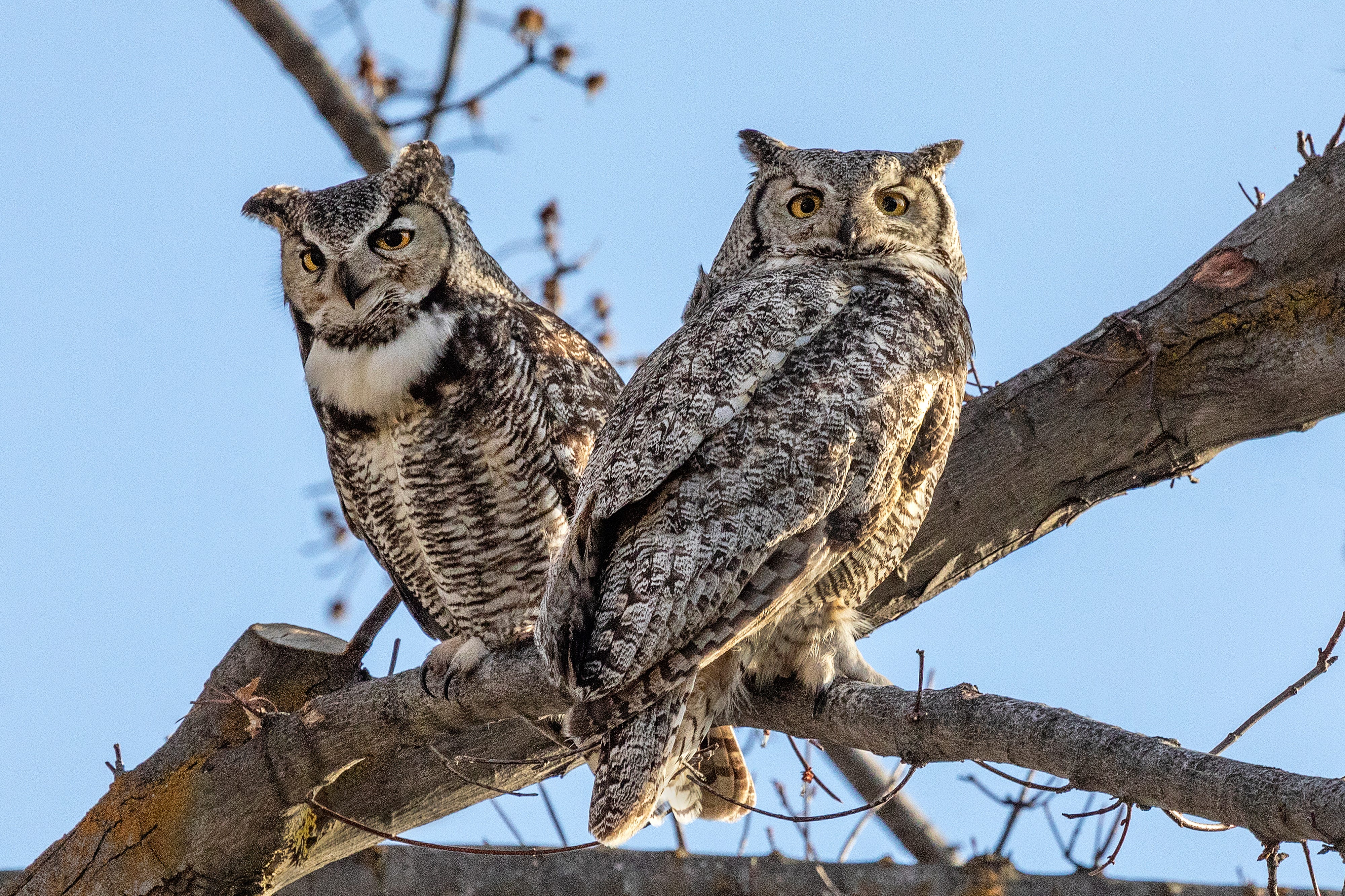
A great horned owl is one of North America’s largest owls, boasting a wingspan of up to five feet. Their name comes from the prominent horn-like tufts of feathers on their heads. Their large, yellow eyes, producing an intense and piercing gaze, remain fixed in their sockets, requiring them to rotate their necks nearly 270 degrees to survey their surroundings. By bobbing and tilting their heads, these owls can triangulate the position and distance of prey—as well as the activities of curious photographers.
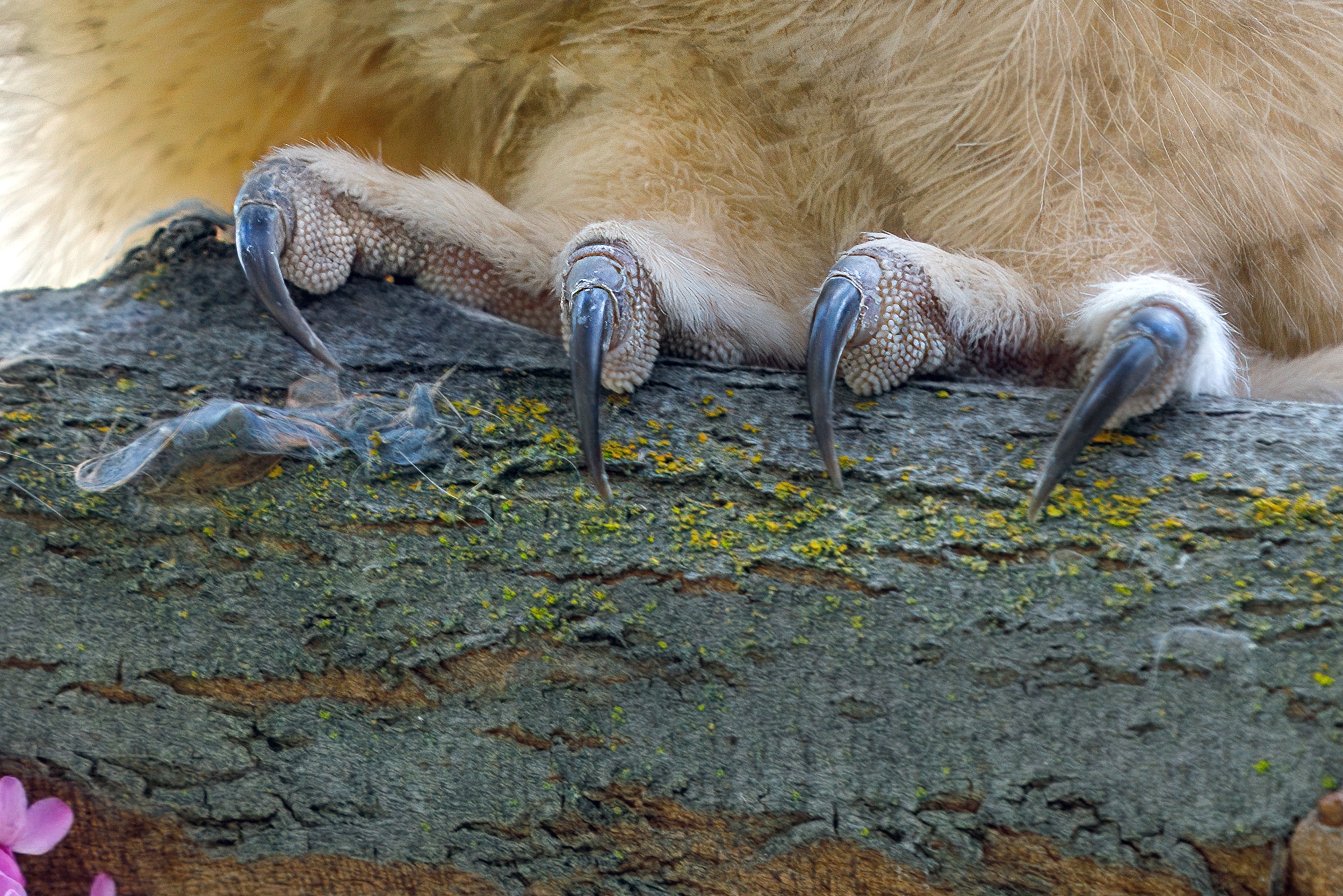
These magnificent creatures are covered in feathers down to their toes and possess talons capable of exerting up to 500 pounds of pressure per square inch. They can carry prey weighing as much as nine pounds—alarmingly more than a Chihuahua, Yorkshire Terrier, or medium-sized housecat. Fortunately, reports of such occurrences are extremely rare.
The nesting process is equally impressive. Great horned owl eggs are incubated by the female for about four weeks, during which the male provides food. Owlets, weighing just an ounce at birth, hatch with closed eyes and pink skin covered in fuzzy whitish-gray down. They remain in the nest for five to six weeks before venturing into the tree canopy—a stage aptly called “branching.” During this time, the fledglings rely on their parents for food until they learn to fly at around nine weeks. Even then, they often stay close for months as they learn to hunt for themselves.
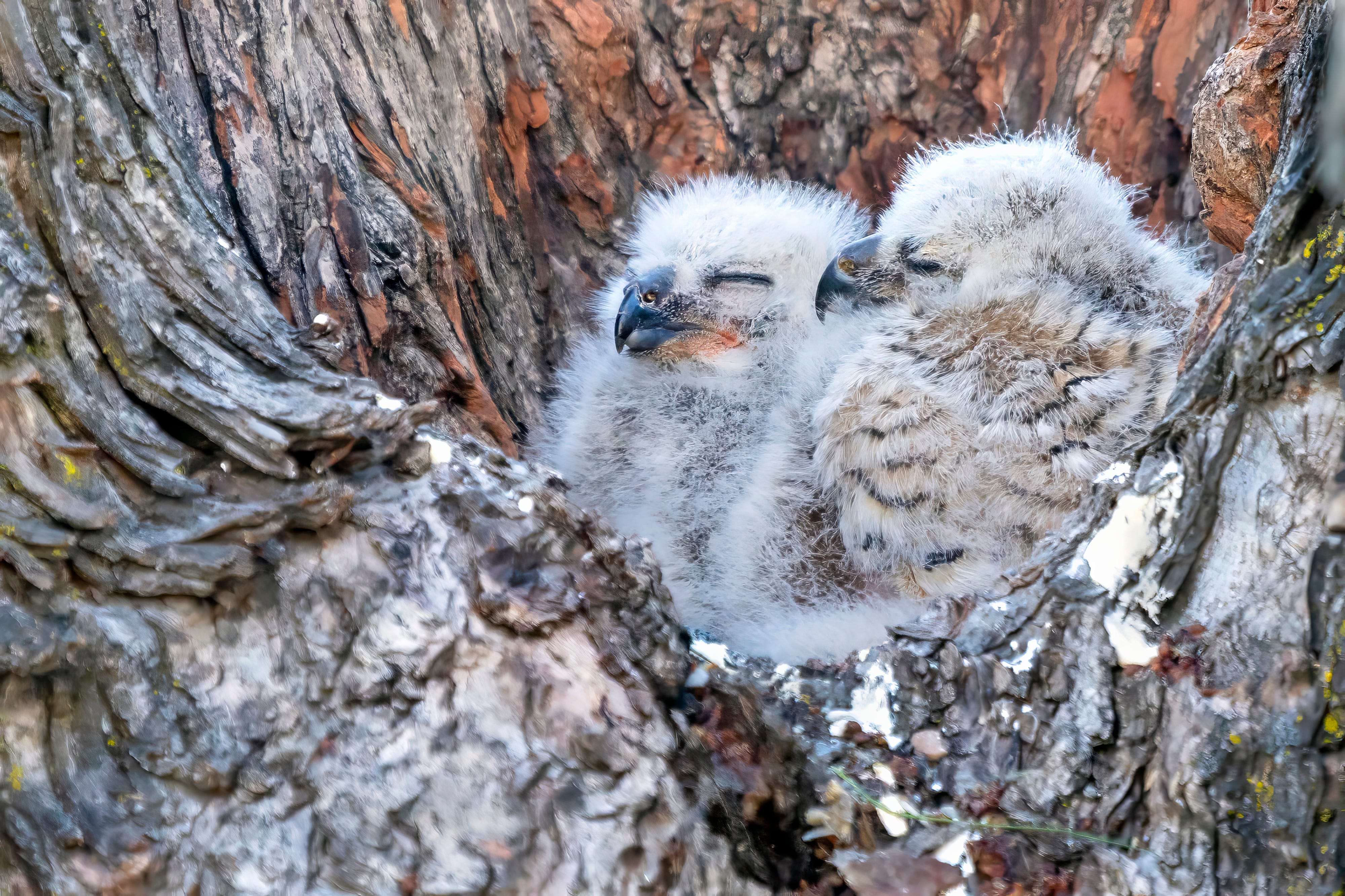
In the spring of 2022, about a week after spotting the nesting female, I caught my first glimpse of her owlets—two tiny bundles of white fluff peeking just above the rim of the nest (as two watchful parents stood guard in a nearby tree). Each week brought noticeable changes as their downy feathers gave way to darker plumage.
Weathering the Storms
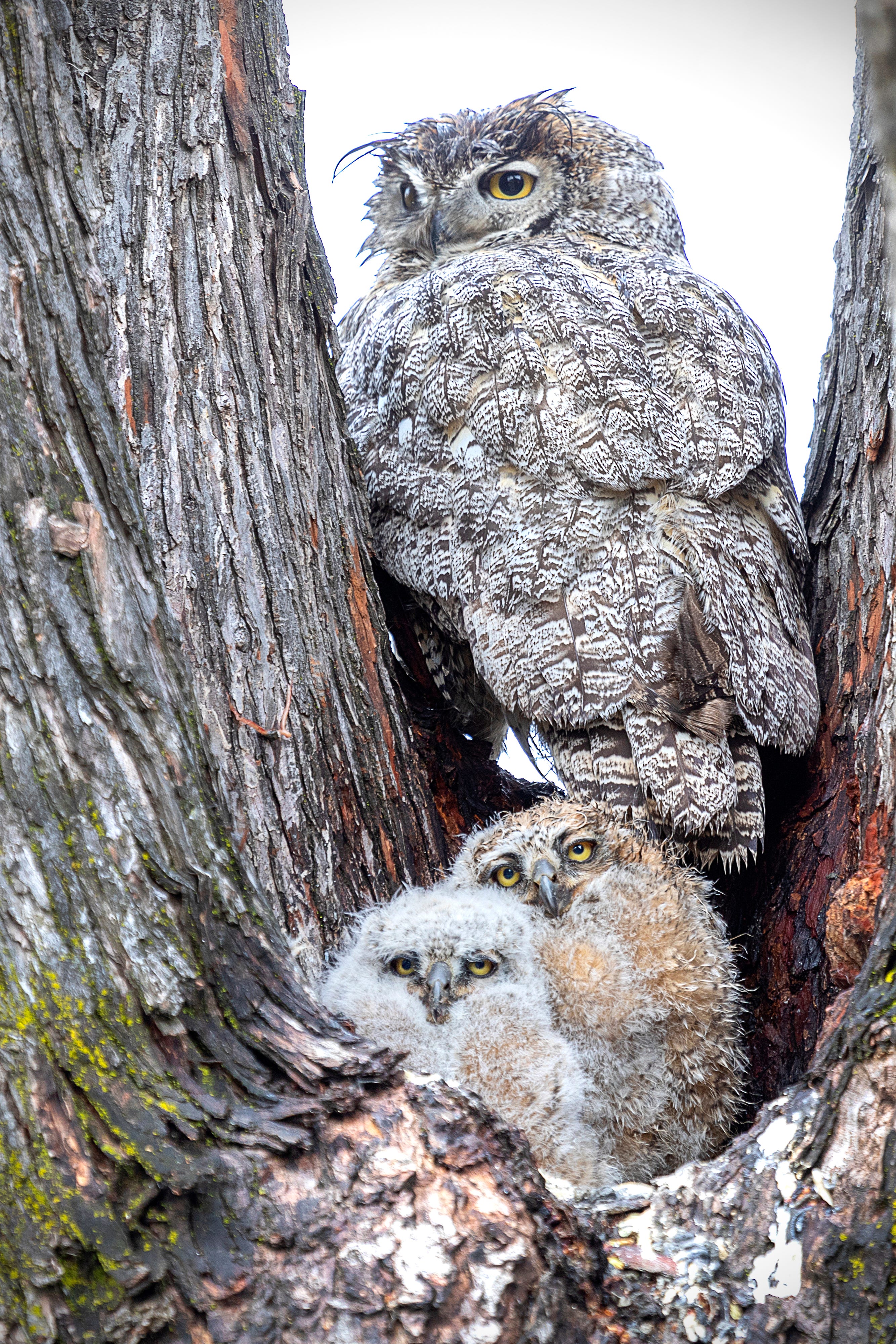
After a long week of protecting her babies from relentless April storms of snow, rain, and wind, I watched mom briefly leave the nest and perch, bleary-eyed, on a nearby branch. Her two owlets, one slightly larger than the other, stared blankly in her direction, their heavy eyelids blinking comically as they drifted in and out of micro-naps.
But the tranquil scene was abruptly interrupted when a curious squirrel ventured too close. In an instant, the mother owl exploded from her perch, pouncing on the intruder, who narrowly escaped her razor-sharp talons. Satisfied her teenagers were safe, she kept watch from above as the owlets stared cluelessly into space—blissfully unaware that mom had just saved them from a furry creature that would likely become their lunch in the near future.
This is one of my all-time favorite wildlife pictures.
Branching Out
As the weeks passed, the owlets outgrew their nest, jostling for space and position.
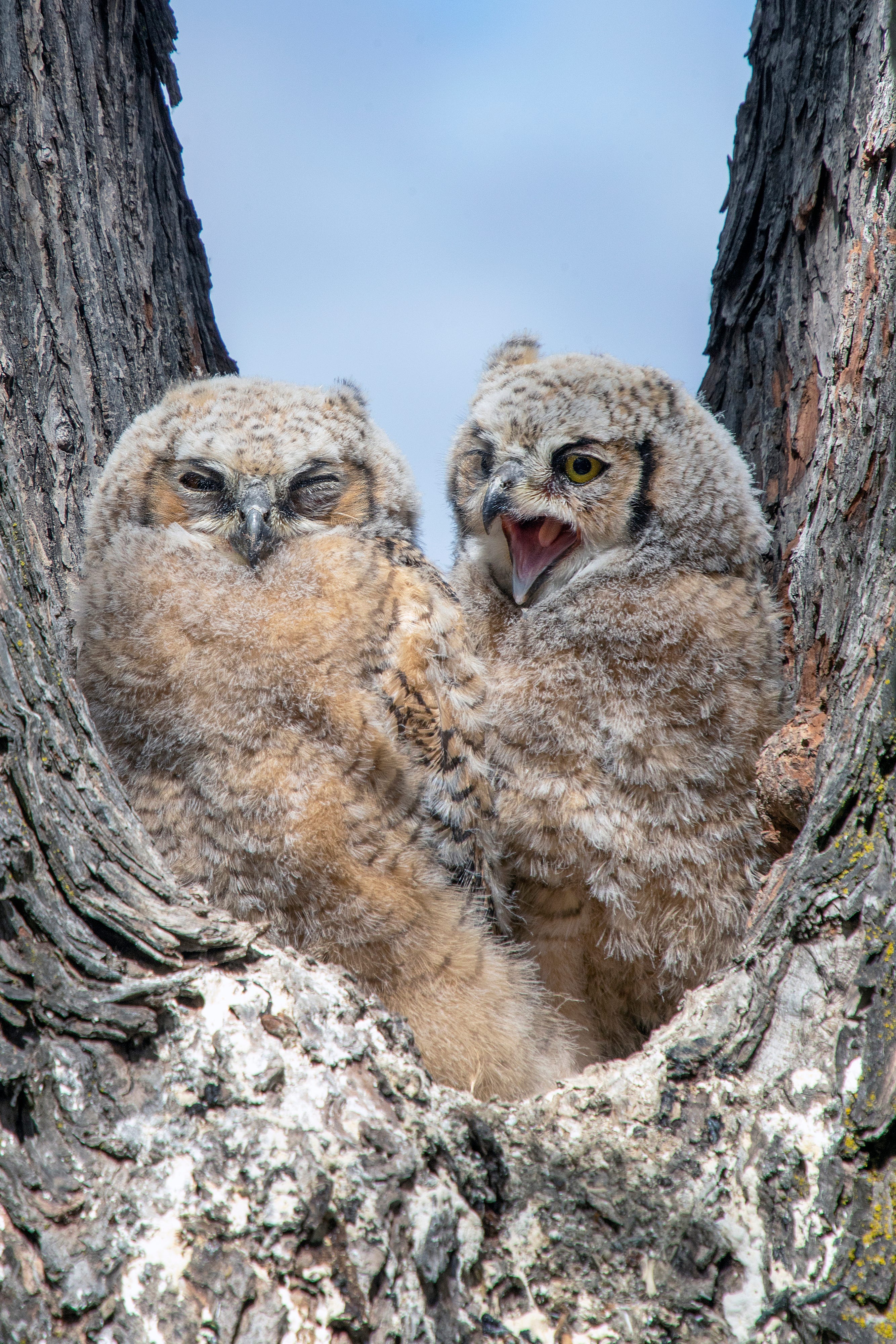
By mid-April, they began venturing higher into the tree. Though still unable to fly, their parents remained ever vigilant, responding to the constant demands for food with morsels of small creatures with tails.
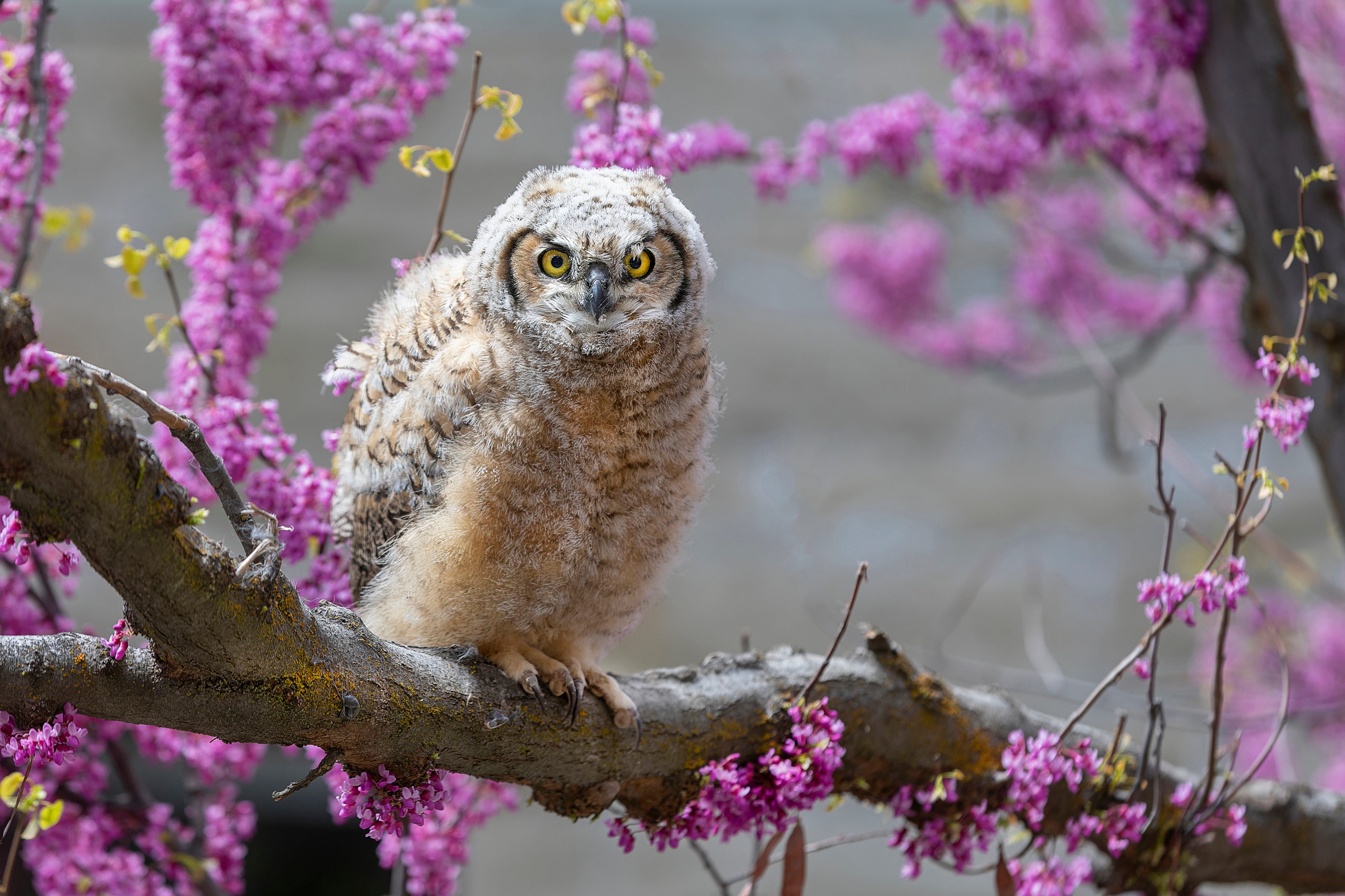
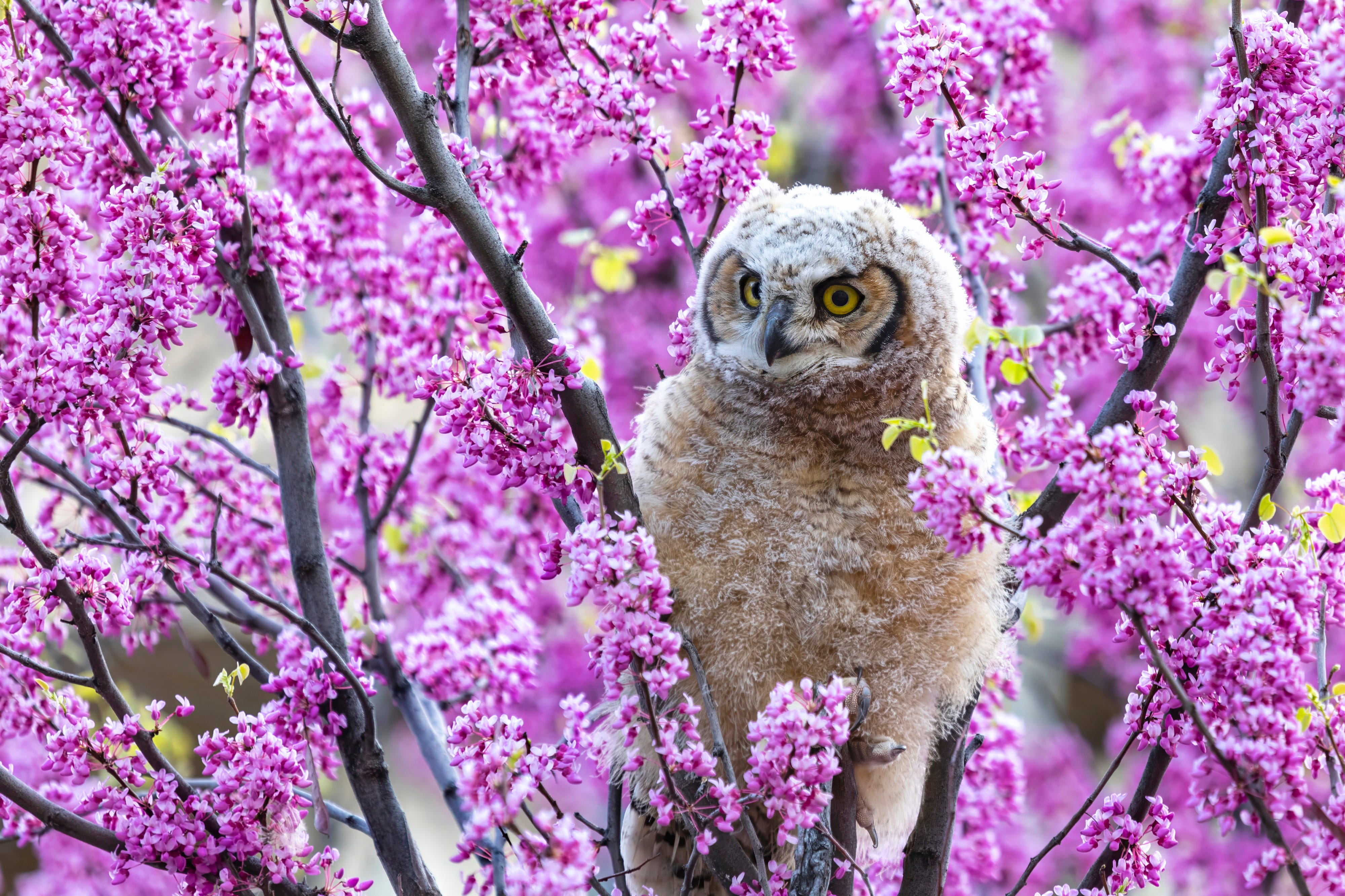
One day, I discovered that one of the owlets had relocated to a nearby redbud tree where an explosion of pink blossoms created a stunning backdrop for photographs. Over the next week, although I often intended to stay home and get some work done, the thought of an owlet in a blossoming pink tree was too hard to resist, and I found myself spending hours watching the wandering owl explore its new surroundings.
A Hilarious Misstep
As a general rule, owl watching is not an exciting sport. Because most owl activity occurs at night, their days are spent sleeping or sitting motionless except for blinking their eyes and swiveling their heads as they slowly scan their environment. But like most wildlife photography, patience is sometimes rewarded with brief moments of excitement.
On a particularly glorious day, after taking nearly identical photos for over an hour, a rumbling truck startled the redbud owlet awake. It stared hopefully in its mother’s direction for several minutes before clawing its way to the top of the tree. Small branches bent precariously under its weight, swaying wildly.
I started to film this interesting activity until a friendly person arrived and began to chat. Although this momentarily distracted me from filming, frantic motion above redirected my attention to the tree where the owlet, still looking in the direction of its mother, SUDDENLY LAUNCHED ITSELF INTO THE AIR, wings outstretched. But instead of soaring gracefully as it apparently intended, it tumbled end-over-end through the branches, landing unceremoniously in the flower bed below. Although I barely had time to raise my camera, I was fortunate to capture a few shots of its descent, including its hilarious expressions of terror and disbelief.
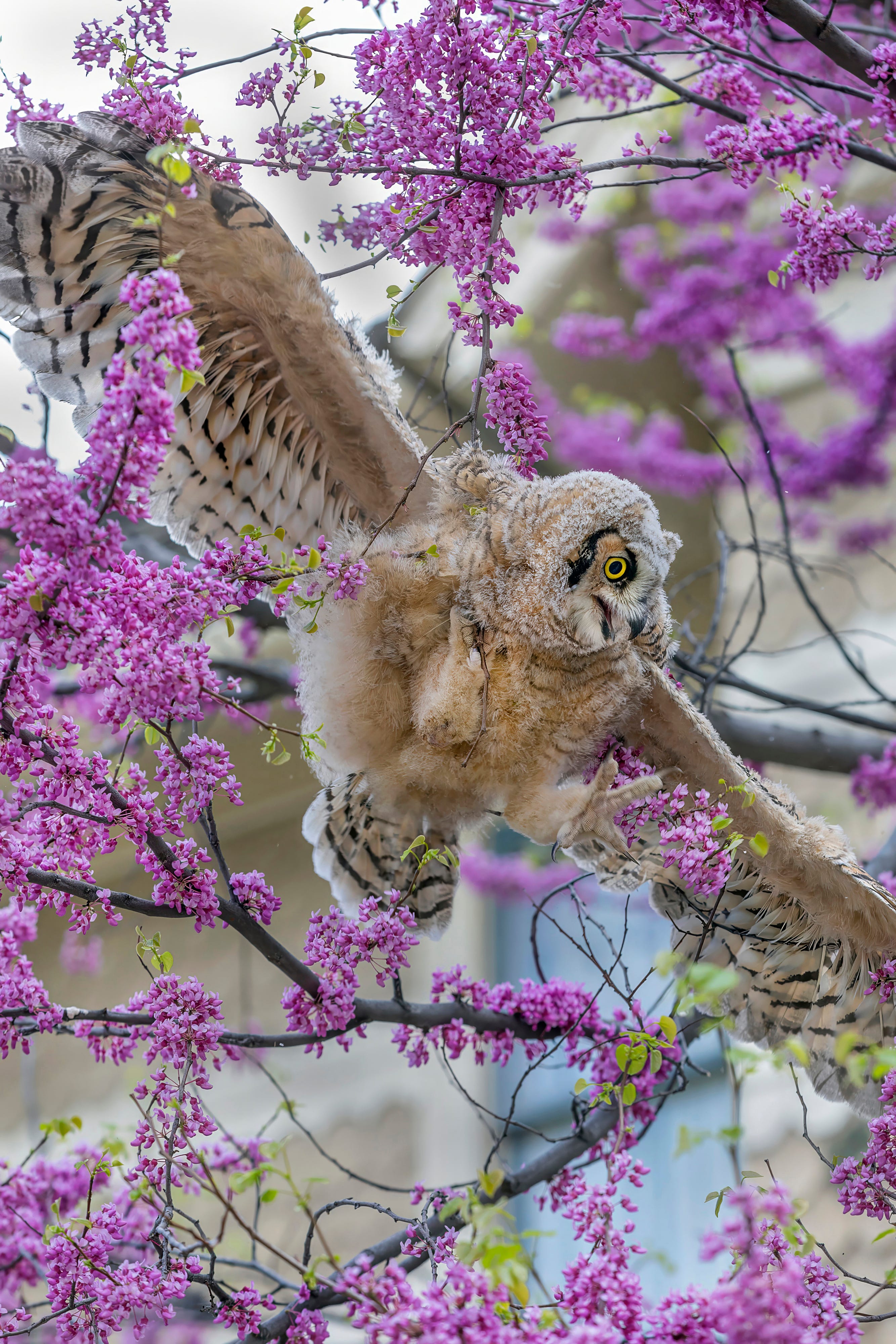
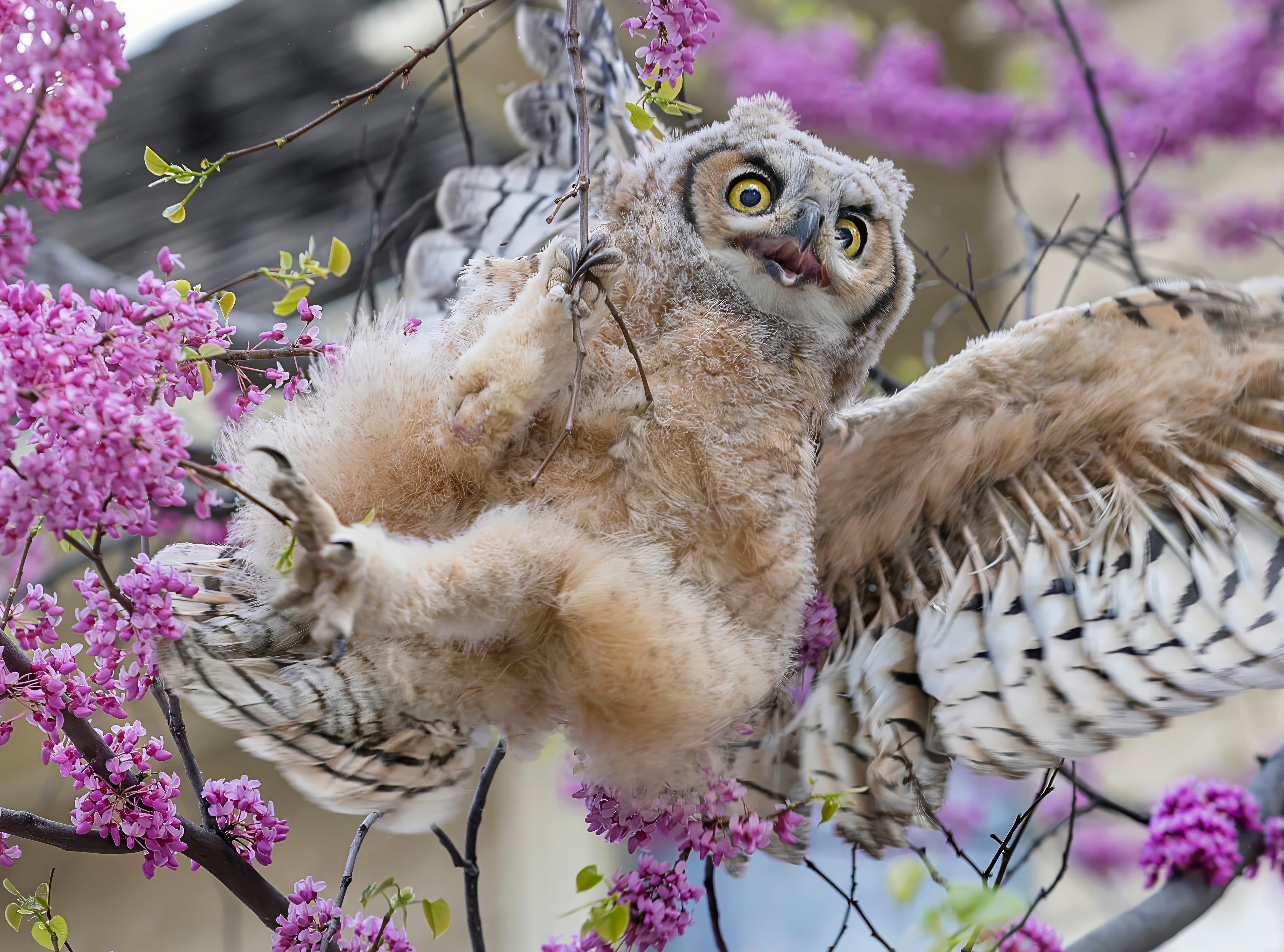
Though dazed, the owlet seemed unharmed by the fall, cushioned by its many layers of feathers. After regaining its composure, it began exploring its new surroundings, creeping through the garden with cautious curiosity. Although I remained at a respectful distance, it often cast suspicious glances in my direction until loud teenagers passing by prompted it to retreat into the corner of the garden for a brief nap.
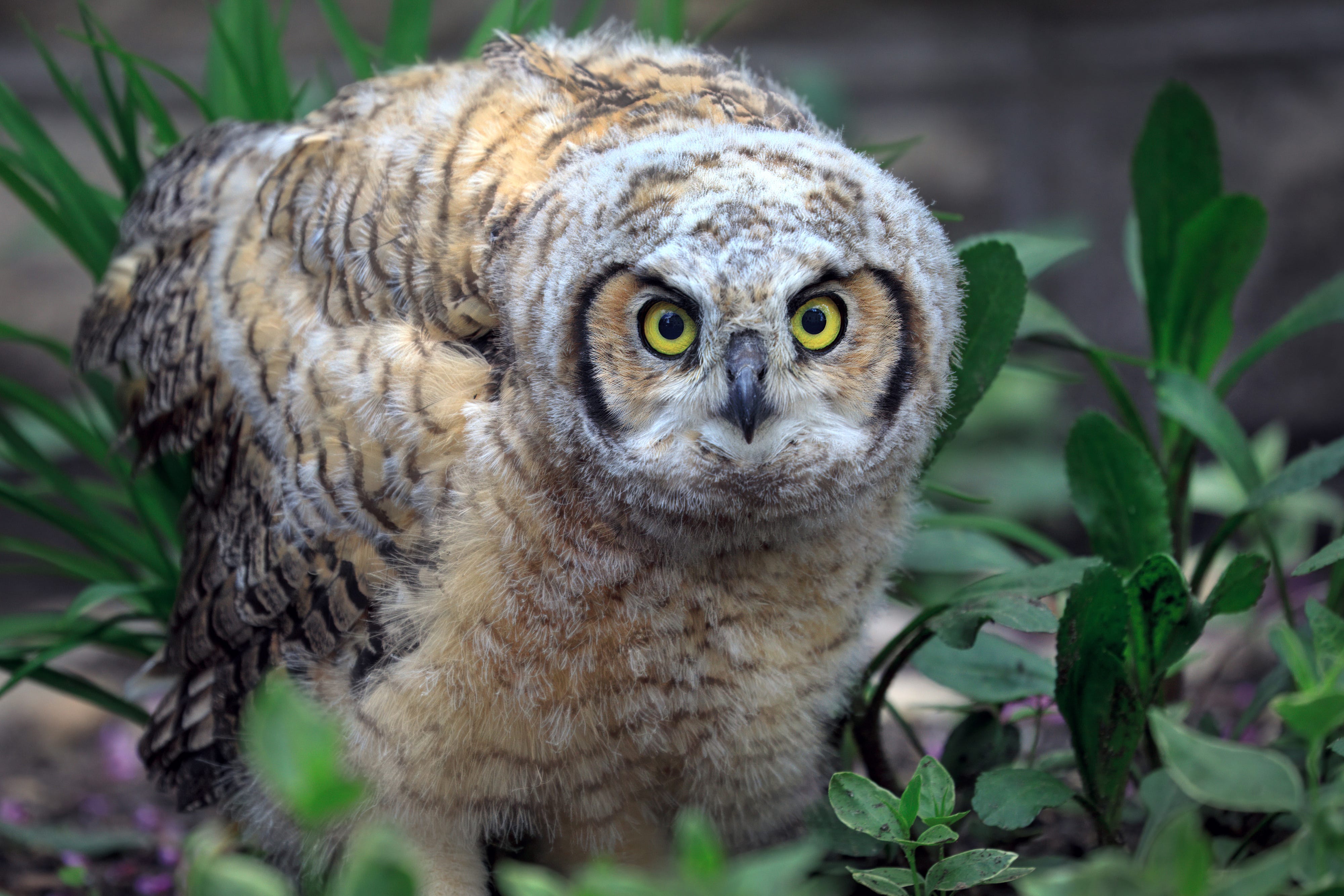
At one point, it turned its attention to quail who were zigzagging along until a sharp alarm from a sentinel quail caused them to explode into the air. The owlet watched all of this commotion with mild interest as it continued to surveil the garden through glassy eyes.
Later, it ambled back to the redbud tree where it attempted to climb into the tree using its talons, beak, and flailing wings, only to get stuck halfway. After another tumble into the grass, it settled in for another nap.
Confident that the bird would eventually return to the branches, and knowing that watchful parents would protect it, I abandoned this wonderful scene for the day.
Lessons from the Ground
Although I intended to return, speaking engagements in Ohio and North Carolina took me far from home until the blossoms were gone and the much larger owlets were perched high above. The owl-watching season was over, but the memory of that failed launch remains vivid, and sharing photos of the owlet’s tumble is always fun.
People often ask why the owlet attempted to fly before it was ready. I explain that it is common for young owls to end up on the ground during the branching phase -- either on purpose or by accident. As they move between branches, they use their wings for balance and their talons and beaks to climb, and they occasionally misjudge distances, lose their grip, and fall to the ground where they can hop and creep in a new environment until they climb back to safety and eventually take their first real flight. These falls are not failures—they are part of the learning.
The owlet’s tumble, its attempts to climb back up, and its exploration of new surroundings were all part of figuring things out. Life is like that. Growth is rarely smooth, often messy, and sometimes laugh-out-loud funny. So, if you launch too soon and find yourself on the ground, don’t despair. Hop around. Explore your surroundings. Meet new people. And when you’re ready, climb higher. One day, your launch will take you soaring into the sky.
NOTE: Additional information about this story, as well as photography tips, will be shared directly with subscribers who support this newsletter through small paid subscriptions.